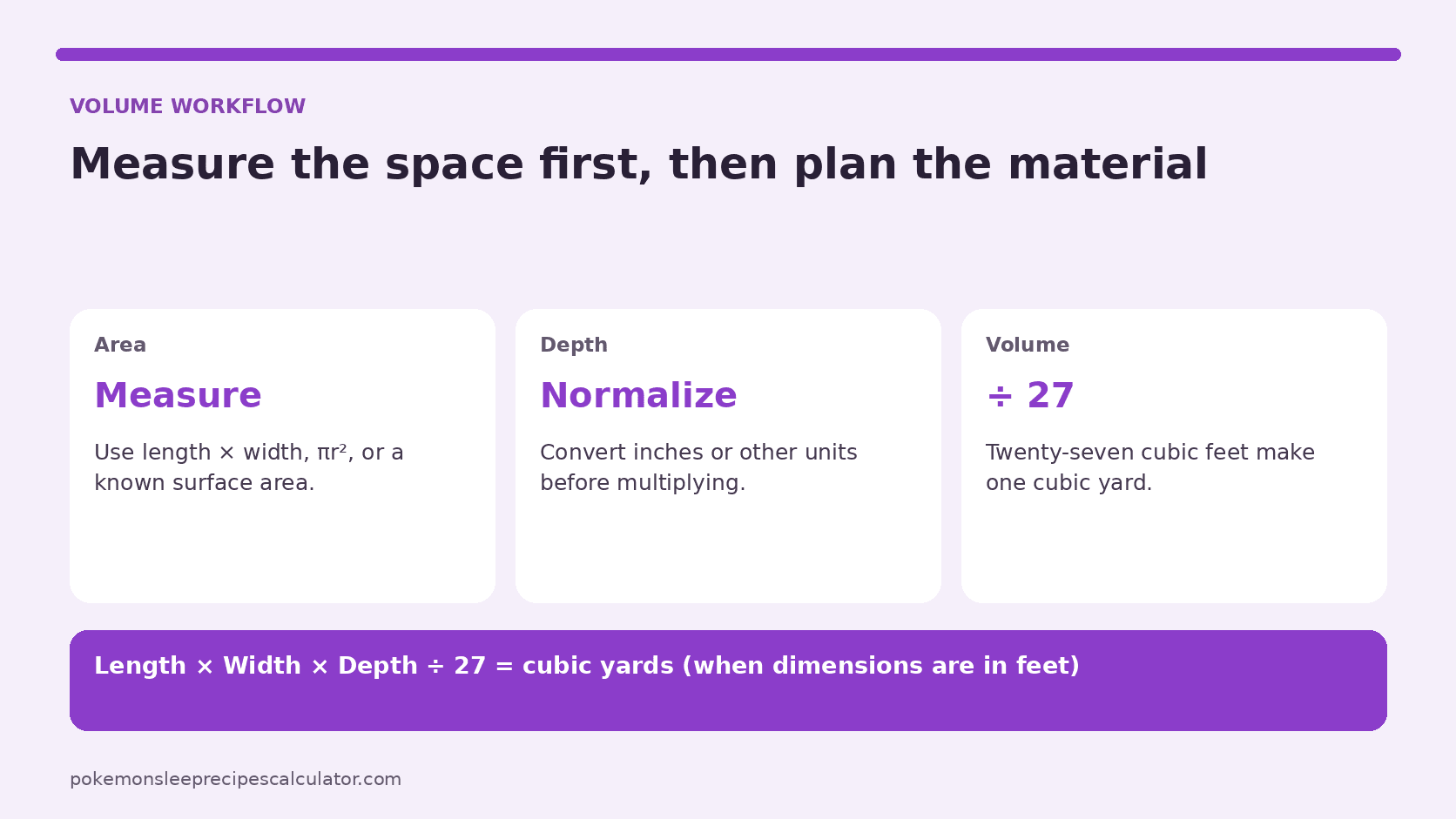
A cubic yard measures volume, not area
A square-foot measurement tells you how much surface you have. A cubic-yard measurement tells you how much three-dimensional space material must fill. Depth is therefore essential. The cubic yard calculator keeps depth and measurement units visible while you work. A 200-square-foot bed at 2 inches deep needs far less material than the same bed at 6 inches deep.
The most reliable workflow is to calculate volume in one consistent unit first, then convert that volume to cubic yards. For projects measured in feet, calculate cubic feet and divide by 27. NIST's 2026 Handbook 44 confirms that 27 cubic feet equal one cubic yard.
Rectangular projects: length × width × depth
For a rectangular bed, pad, trench, or fill area, multiply length by width by depth after putting all three dimensions into compatible units. If length and width are in feet but depth is in inches, divide the depth in inches by 12 before multiplying.
Example: a 12 ft × 10 ft area at 4 inches deep uses a depth of 4/12 ft. The volume is 40 cubic feet. Divide 40 by 27 and the geometric volume is about 1.48 cubic yards before any project allowance.
Circular projects: use π × radius² × depth
For a circular area, square the radius, multiply by π, and then multiply by depth. Be careful not to substitute diameter for radius. If you measured the full width of the circle, divide by two first.
The same unit rule still applies: radius and depth must be compatible before multiplication. Converting units at the beginning prevents hidden errors later.
Keep allowance separate from geometry
The geometric volume answers one question: how much space does the measured shape occupy? A purchase allowance answers a different question: how much extra material do you want for settlement, uneven grade, spillage, compaction, or project uncertainty?
Because the appropriate allowance depends on the material and job, it should not be silently baked into the formula. Calculate the measured volume first, then add an allowance only when your project needs one.
Do not convert cubic yards to tons with one universal factor
Cubic yards measure volume; tons measure mass. The relationship depends on material density, moisture, particle size, mix design, and compaction. A cubic yard of mulch does not weigh the same as a cubic yard of wet soil or concrete.
If a supplier sells by weight, use the supplier's density or coverage information for that specific material. A calculator that invents one universal tons-per-yard number can create expensive ordering errors.
Use bag estimates only after the volume is stable
Bag calculations are useful for smaller projects, but they should come after the project volume has been calculated correctly. Convert the bag's stated volume into the same unit as the project result, then divide the required volume by the bag volume and round up to whole bags.
Check the package label because products that look similar can use different bag sizes. For bulk orders, compare the calculator result with the supplier's minimum order, delivery increment, and material-specific recommendations.
A practical measurement checklist
Measure each dimension in more than one place when the site is uneven. Use an average only when that makes sense for the project, and keep notes on the depth you actually intend to install.
Then run the calculator with no allowance first. Review the formula, add an allowance only if needed, and separate optional cost or bag estimates from the base volume. That keeps the math traceable if your measurements change later.